LECTURE SERIES

Reading The Little Prince Differently

27 lectures to read in sequence.

LECTURE27

2025.08.28

Why do human beings mistake their wishes and inferences for facts, and what must we do to leave that delusion behind and live wisely?

I Like Listening to the Stars at Night — The Path of Wisdom Proposed by a Twenty-First-Century Arahant, The Little Prince Chapter 27 (Final Chapter)

Reading the final chapter of The Little Prince through humanity's tendency to project wishes, imagination, and experience onto the world as fact, this essay connects the common origin of religion, philosophy, and science, the work's lingering Gnosticism, the Cave Octet, and ora and pāra to a path of wisdom grounded in questions, observation, and critical thought.

강의 글 읽기 →
LECTURE26

2025.08.27

How should we critically read Chapter 26 of The Little Prince, which presents a soul after death and transcendence as fact within a beautiful story of relationship and love, and why should this book not be recommended to teenagers?

Why This Book Should Not Be Recommended to Teenagers: Struggling in Belief and Mysticism — A Path of Wisdom Proposed by a Twenty-First-Century Arahant, The Little Prince Chapter 26

Reading the snake and death scene in Chapter 26 of The Little Prince, I criticize its Gnostic fantasy that a self discards the body and returns to the stars, and its suitability as a recommended book for teenagers. Through self-immolation, souls, the Rapture, and religious fraud, I explain a Buddhist path that looks at reality through reconsideration and cross-checking rather than belief and authority.

강의 글 읽기 →
LECTURE25

2025.08.26

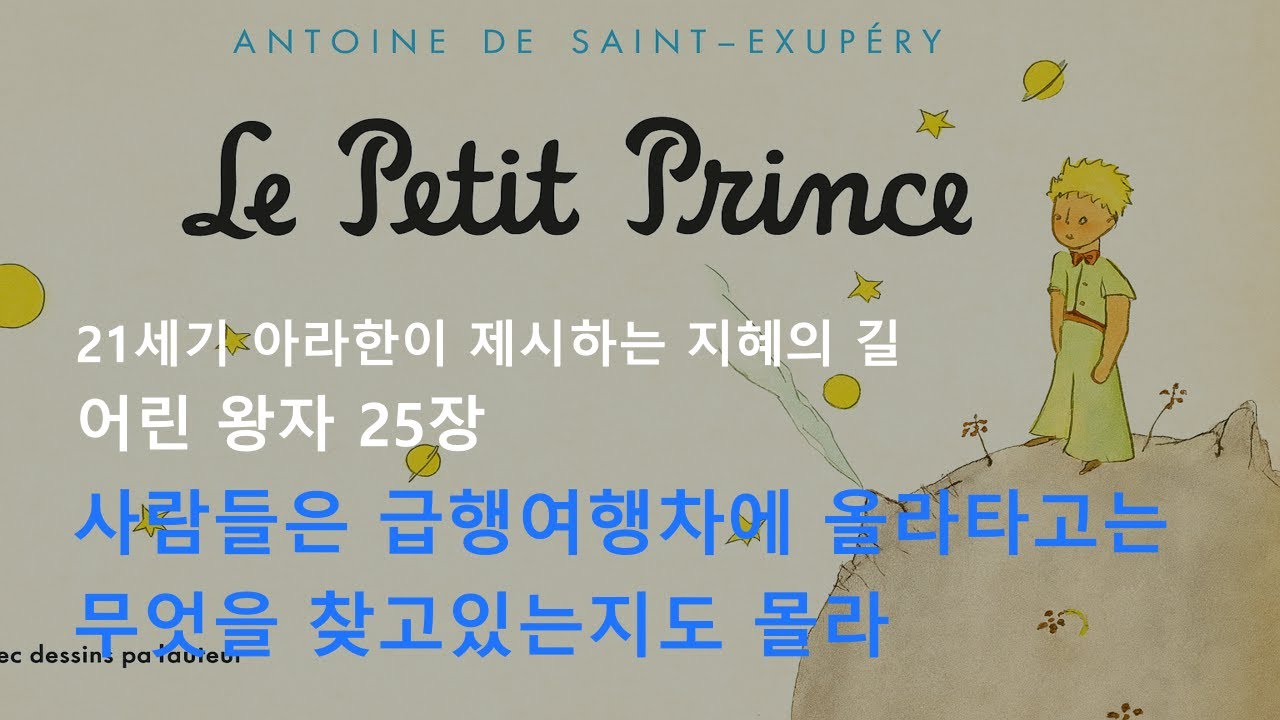
Where am I rushing without even knowing what I seek, and what value and gratitude do I give to the people, things, and relationships already beside me?

People Board Express Trains Without Knowing What They Seek — The Little Prince, Chapter 25

Beginning with the well and a sip of water in Chapter 25 of The Little Prince, this chapter criticizes people for chasing worldly and transcendent desires without knowing what they seek. It examines how one rose and one sip acquire value, how taming entails the suffering of separation, and how dependent arising grounds gratitude and alms-going, before sharply criticizing a Jogye Order memorial that sided with power rather than the suffering public.

강의 글 읽기 →
LECTURE24

2025.08.25

If we can neither dismiss everything invisible as mysticism nor believe it all as truth, how should we discern and honor the promises and loyalty that sustain relationships?

On What Cannot Be Seen: Why Promises and Loyalty Matter — The Little Prince, Chapter 24

Reading the stars, desert, well, and rose in Chapter 24 of The Little Prince, this chapter argues that relationships, memories, promises, and loyalty are invisible values that genuinely constitute life. Through memories of the speaker's father and a family consultation by Venerable Pomnyun, it examines social promises, nuclear families, caregiving, dialogue, and conflict, while rejecting religious falsehoods that turn promises into absolute commands backed by gods, karma, or an afterlife.

강의 글 읽기 →
LECTURE23

2025.08.22

If the superstitions that enable cults are also repeated through established religion and social authority, how can we learn not what to believe, but what and how to observe and verify?

Cults Are Made Possible by the Superstitions of Established Religions — The Little Prince, Chapter 23

Beginning with the thirst-quenching pills and fifty-three saved minutes in Chapter 23 of The Little Prince, this chapter examines how superstition that demands belief in the unobservable creates the ground on which cults grow. It considers JMS, Manmin Central Church, Hongik Academy, heaven, hell, rebirth, supernatural powers, fortune-telling, geomancy, and miracle cures, calling for observation, questioning, reasoning, and scientific verification instead of belief.

강의 글 읽기 →
LECTURE22

2025.08.21

If I do not even understand the purpose and operation of what I urgently pursue—whether worldly satisfaction or transcendent perfection—what should I actually observe and question in this life?

The Railway Switchman and the Little Prince: What Are We Looking For? — Chapter 22

Reading the railway switchman and three express trains in Chapter 22 of The Little Prince, this chapter asks where people hurry and what they seek. It follows ancient questions about soul, god, and afterlife, the intellectual networks around the fifth century BCE, and Gautama Siddhartha's ascetic and Gnostic search toward impermanence, non-self, and dependent arising, then calls for observation, questioning, and understanding beyond both worldly pleasure and fantasies of transcendent perfection.

강의 글 읽기 →
LECTURE21

2025.08.20

While recognizing the natural taming that makes family and friends special through shared time, what reflection is needed to see the dignity of strangers and even enemies beyond those relationships?

The Fox and the Little Prince: Reconsidering Taming — Chapter 21

After closely reading the fox and taming in Chapter 21 as a story of relationship, time, ritual, waiting, and responsibility, this chapter critically reconsiders the conclusion that only those related to me are unique while the rest are nothing. It recognizes natural attachment in families and animal groups, yet argues that agape, compassion, love of enemies, and non-discrimination arise through reflection and questioning that step beyond natural partiality.

강의 글 읽기 →
LECTURE20

2025.08.19

Within sudden joy, depression, jealousy, or regret, how can we discover the judgment and standard that produced the emotion and ask whether that standard is truly valid?

Five Thousand Roses and the Little Prince: Changes in Judgment and Emotion Are the Door to Awakening — The Path of Wisdom Presented by a 21st-Century Arahant, The Little Prince Chapter 20

Beginning with the moment the Little Prince sees five thousand roses and suddenly feels miserable, this chapter explains how a change in emotion opens a door to the judgment made just before it and the standard that produced that judgment. Through financial comparison within a family, regret over not taking my father around the world, the Eiffel Tower, pilgrimage sites, Korean cultural content, and a child’s golden robot, I examine how experience installs our desires and standards of value. I then explain why skeptical reflection on name-and-form and concepts is the Buddhist path of wisdom.

강의 글 읽기 →
LECTURE19

2025.08.14

If the feelings, judgments, and religious beliefs I treat as facts are echoes of what I learned and absorbed, how can I recognize them and begin inquiry, observation, and dependent reasoning?

The Echo and the Little Prince: Why the Foundation of Buddhism Is Inquiry — The Path of Wisdom Presented by a 21st-Century Arahant, The Little Prince Chapter 19

Through the scene in which the Little Prince mistakes the echo of his own voice for another person’s reply and judges Earth a strange planet, this chapter explains that human thought operates like an echo, returning learned words and familiar standards. It critiques uncertainty in translation, conditioning that divides normal from strange, emotions and judgments, memorization-centered education, and Buddhist claims about the miraculous power of relics. It argues that observing our own reactions, questioning them, and tracing their dependent causes is the foundation of Buddhism and wisdom.

강의 글 읽기 →
LECTURE18

2025.08.12

Why do I regard myself and humanity as important and valuable while judging other people, living beings, and things as insignificant, and how can I recognize whether that judgment is truth or merely a product of my standpoint?

It Was an Insignificant Flower with Three Petals: The Path of Wisdom Presented by a Twenty-First-Century Arahant, The Little Prince Chapter 18

Placing side by side the “insignificant flower with three petals” encountered in the desert and the flower’s judgment that rootless humans drifting on the wind look uncomfortable, I ask from whose standpoint value and importance are created. The lecture examines how humans regard themselves as important as baobab trees while devaluing other lives and people, how success and honor become relative rankings, and how concepts command us. It concludes with compassion as non-discriminating love and with the limits of our own judgments.

강의 글 읽기 →
LECTURE17

2025.08.11

Why do human beings imagine themselves as important as baobab trees and as the center of the universe, and after questioning that ancient belief, where should we locate the value of life and humanity?

They Regard Themselves as Important as Baobab Trees: The Path of Wisdom Presented by a Twenty-First-Century Arahant, The Little Prince Chapter 17

In Chapter 17 of The Little Prince, people on Earth believe they occupy enormous space and are as important as baobab trees, yet the Little Prince arrives in a desert and meets only a snake. Beginning with the snake as a symbol of death and return to the soil, and with loneliness even among people, the lecture examines ancient myths and religions that placed humanity at the center of the universe. It then traces how skepticism, materialism, āstika and nāstika traditions, the Sophists, and early Buddhism challenged inherited certainty around the fifth century BCE, concluding that after the Renaissance and scientific revolution we must create human value rather than receive its guarantee from the cosmos.

강의 글 읽기 →
LECTURE16

2025.08.09

If the connections among eight billion different people produced AI as an emergent phenomenon, how should we redesign education, ownership, distribution, and the meaning of life as traditional labor rapidly disappears?

Earth: A Place of Diverse People, Artificial Intelligence, and the End of the Labor Market — The Path of Wisdom Presented by a Twenty-First-Century Arahant, The Little Prince Chapter 16

Earth in Chapter 16 of The Little Prince is a “very unusual planet” where kings, drunkards, businessmen, and countless lamplighters coexist. Humanity grew from roughly two billion in 1943 to about eight billion today. Each person sees the world from a different well, yet when those differences connect they form networks of dependent arising and generate emergence. Viral mutation, culture, science, philosophy, and today’s AI all arise from diversity. The second half examines GPT-5 and Gemini, translation, dubbing, diagnosis, image and video production, coding, driving, and the rapid contraction of traditional professions, asking whether AI-created wealth will be monopolized by owners or shared by society.

강의 글 읽기 →
LECTURE15

2025.08.07

How much can we trust human books and transmitted words, and how should the fact that everything is ephemeral change the way we live today?

The Geographer’s Planet: Books, Lies, Ephemerality, and ‘Because the Flower Is Ephemeral’ — A Path of Wisdom Proposed by a 21st-Century Arhat, The Little Prince Chapter 15

The geographer who never explores exposes how books depend on fallible testimony, memory, evidence, and interpretation. From there, the essay questions scripture and authority, revisits the Cave Chapter and humility, and shows how impermanence changes our relationship to today, desire, and the rose-colored images we inherit.

강의 글 읽기 →
LECTURE14

2025.08.05

When situations and conditions change, must rules and precepts remain unchanged—and what purpose should the norms we treat as absolute actually serve?

The Lamplighter’s Planet: Rules, Change, and Being Bound by Rules — A Path of Wisdom Proposed by a 21st-Century Arhat, The Little Prince Chapter 14

The lamplighter repeats a once-reasonable rule every minute after conditions have changed. From that image, this essay questions the circular logic of ‘the rule is the rule,’ examines how the Buddha revised precepts, criticizes Buddhism’s transformation into a religion of rules, and asks us to inspect the countless conventions embedded in our minds.

강의 글 읽기 →
LECTURE13

2025.08.04

Is ownership an inherent reality, or an illusion sustained by claims, force, and law—and how does that illusion shape wealth and inequality?

The Businessman’s Planet: Calculation, Ownership, Wealth, and the Claim That Something Is Mine — A Path of Wisdom Proposed by a 21st-Century Arhat, The Little Prince Chapter 13

Beginning with the businessman who counts and owns the stars, this essay examines calculation as abstraction, ownership as a claim maintained by violence, law, and conditioning, and the way monetary and capitalist systems turn that illusion into widening inequality. It concludes by asking what redistribution and dependent-origination thinking require of us.

강의 글 읽기 →
LECTURE12

2025.08.02

How does alcohol consumed to forget sorrow and shame come to consume both the person and the family, and how can we break the cycle when past suffering keeps tormenting us?

The Drunkard’s Planet: Sorrow, Self-Harm, Addiction, and “Every Day, Alcohol Consumes Me” — A Path of Wisdom Proposed by a 21st-Century Arhat, The Little Prince Chapter 12

Beginning with the drunkard who drinks to forget the shame of drinking, this essay follows alcohol’s cycle through addiction, family violence, a culture unable to meet without drinking, lost opportunities for growth, and traumatic memory. It then examines the second arrow and two ways of changing our relationship to past suffering.

강의 글 읽기 →
LECTURE11

2025.08.01

Why does the desire for praise and respect seem to place me at the center while actually handing the center of my life over to other people?

The Planet of Admiration: Praise, Respect, and Being the Best—Everyone Else Exists Only to Praise Me | The Little Prince, Chapter 11

Through the vain man in Chapter 11 of The Little Prince, I examine the structure of the desire for praise and respect. The need for recognition appears to put the self at the center, but actually hands control of happiness to other people’s judgments and makes an embellished image more important than one’s real self. I then trace how this structure leads to personal misery, religious hypocrisy, and mysticism.

강의 글 읽기 →
LECTURE10

2025.07.29

After removing kings, did modern people truly become free citizens, or do we live as subjects of new kings called money, experts, religion, and the state?

The King’s Planet: Authority, Commands, Judgment, and the Belief That Every Human Is a Subject | The Little Prince, Chapter 10

Through the king in Chapter 10 of The Little Prince, I examine an authority that sees every human being as a subject. Beginning with commands, judgment, and the contradiction of “reasonable authority,” I interpret the change from monarchy to republic and modernity as a continuing process of breaking concepts, then criticize a society that cannot question the new authority of money, experts, religion, and the state.

강의 글 읽기 →
LECTURE09

2025.07.29

Do I assume that because I expressed love and goodwill, the other person necessarily received the meaning I intended?

Why the Little Prince Failed to Recognize the Rose’s Love | A Path of Wisdom for the 21st Century, The Little Prince Chapter 9

In Chapter 9 of The Little Prince, the rose finally confesses her love as the Little Prince is leaving. Yet having loved someone and having successfully communicated that love are not the same. I examine why people with different bodies, personalities, experiences, and languages interpret the same words and actions differently, and how failures of communication arise from families and couples to politics and religion.

강의 글 읽기 →
LECTURE08

2025.07.26

Can we accept that each person sees the world from a different planet and cave without turning difference into error or evil?

The Little Prince and the Rose: We Are Different — A Path to Wisdom Proposed by a 21st-Century Arhat, The Little Prince Chapter 8

Beginning with the conflict between the Little Prince and the rose, this chapter examines the human difficulty of understanding another being. It moves through racial, religious, and class discrimination, social demands for uniformity, and the Catholic Index of Forbidden Books to argue that questioning and tolerance are foundations of Buddhist wisdom and compassion.

강의 글 읽기 →