LECTURE SERIES

(Live) Criticism Without Sacred Cows

41 lectures to read in sequence.

LECTURE41

2026.11.14

How did an explanation of actual disputes and clinging become the twelve links in service of rebirth, and why do people repeat it as the Buddha’s teaching without understanding its causation?

Critique of the Monk Ilmuk, Part 3 — On the Trap of the Twelve Links: Fabricated for Rebirth

Why can the twelve links not be explained in genuinely interdependent terms? Critiquing Ilmuk’s lecture, I examine the conflict between non-self and rebirth, the circular account of ignorance and defilements, and the addition of birth and death to the Sutta Nipata’s six-link account. I call for observation, questions, and thought instead of interpretations that turn guesses into answers.

강의 글 읽기 →
LECTURE40

2026.11.12

Why claim that unobservable, unprovable heavenly realms and hell actually exist, then demand belief in the words of scripture?

A Critique of Monk Ilmuk, Part 2 — The Monk Who Insists That Heavenly Realms and Hell Exist, Without Even Knowing What the Problem Is

I criticize monk Ilmuk’s account that heavenly realms and hell exist and must be believed despite the inability to prove them. Centering on the undeclared and generally accessible observation, I question scriptural authority, supernatural powers, appeals to science, divisions between noble and lowly, and contradictions in selective belief.

강의 글 읽기 →
LECTURE39

2026.11.10

Should we accept as fact the claim that a thought immediately before death determines the next life merely because it is written in scripture?

A Critique of Monk Ilmuk, Part 1 — Can a Thought Just Before Death Send You to Hell? On the Superstition Called Early Buddhism

I criticize monk Ilmuk’s account that thoughts and offerings immediately before death can overturn a lifetime of actions and determine the next life. Following the signs of dying and three illustrative cases, I question contradictions in karma and rebirth, scriptural authority, killing and morality, regret and repentance, and the relationship between religion and power.

강의 글 읽기 →
LECTURE38

2026.11.03

Can study that abandons understanding and questions offer wisdom capable of responding to the suffering of actual life?

Critique of the Monk Beopsang, Part 5 — Study Without Understanding Is Useless: Korean Buddhism Ruined by Mindlessness and Anti-Intellectualism

I question Beopsang’s “study that is not understanding” and advice to “live lightly” against the realities of life. I distinguish examining self-created concepts from dismissing real suffering as illusion, and discuss the need for wisdom grounded in dependent arising and ongoing questions that respond to disasters, war, and inequality.

강의 글 읽기 →
LECTURE37

2026.10.29

Why does critically reconsidering mind and concepts turn into erasing the world and death as illusions, and how can we recover wisdom for living within human conditions?

Critiquing the Monk Beopsang, Part 4: The World Is Not an Illusion Made by My Mind—On the Nonsense of “Everything Is Made by Mind”

Watching Beopsang’s lecture, I distinguish seeing the world differently according to mind from claiming that mind creates the world itself. Through brain, body, and mind, non-self and non-arising, and grief at the death of someone close, I criticize explanations that erase reality as illusion. Viewer questions and a preview of the next discussion of the Middle Way follow.

강의 글 읽기 →
LECTURE36

2026.10.27

How can we be certain we have confirmed “this very place” if it cannot be explained or compared, and what happens to practical life and wisdom when that certainty stops our questions?

Critiquing the Monk Beopsang, Part 3: When Questions Stop, We Drift Away from Reality—The Effects of the Delusion of “This Very Place”

I examine Beopsang’s Bloodstream Treatise lecture and criticize how an already perfect Way and the confirmation of “this very place” can end inquiry. I explain why language and gestures require distinctions and context, and why doubts after seeing one’s nature should prompt self-observation. I connect neither-one-nor-two and dependent arising with judgments about reality, while also critically reflecting on my own explanation.

강의 글 읽기 →
LECTURE35

2026.10.24

Why does the teaching not to be attached to concepts become a demand to eliminate all judgments and emotions, and can pursuing complete nondiscrimination coexist with human empathy and a dependently arisen life?

Critiquing the Monk Beopsang, Part 2: The Delusion of Complete Nondiscrimination

I criticize a cancer-diagnosis story introduced in Beopsang’s Daodejing lecture and ask whether complete nondiscrimination can be the goal of awakening. Through my younger cousin’s death and my own experience of meditative absorption, I explain how feeling emotions and reconsidering attachment can go together. Viewer questions lead to breathing meditation, neither perception nor non-perception, desires and emotions, and the relationship between body and mind.

강의 글 읽기 →
LECTURE34

2026.10.22

If we are already awakened, why must we confirm it and listen to teachings, and what attitude and wisdom should awakening reveal in actual life?

Critiquing the Monk Beopsang, Part 1: If We Are Already Awakened, Why Listen to You?

I examine Beopsang’s explanations of original Buddhahood and no attainment, asking why confirmation and teaching are necessary if we are already awakened. Distinguishing meditative comfort from wisdom, I explain liberation and Buddhahood as an ongoing attitude of observing dependent arising and reflecting on oneself. Viewer questions extend the discussion to superstition in scripture, temple authority, and money.

강의 글 읽기 →
LECTURE33

2026.08.13

Why does the claim that one must stop sexual activity, escape the desire realm, and enter the form realm to become an arhat misunderstand precepts, desire, the Buddha, and awakening?

A Critique of the Late Professor Kim Seong-cheol: Does Sex Prevent Arhatship?

This lecture challenges the late Professor Kim Seong-cheol’s claim that one must abandon sexual activity, leave the desire realm, and rise to the form realm to become an arhat. It argues that precepts are historically conditioned communal agreements rather than absolute prerequisites for awakening, and that sex is a natural living process, neither good nor evil in itself. The Buddha should not be turned into a post-human being stripped of desire and emotion; scriptures, authorities, and even the speaker’s own claims must remain open to critical questioning.

강의 글 읽기 →
LECTURE32

2026.05.14

Why is the claim that humans can shine by themselves through Seon meditation while AI merely follows orders a misunderstanding of dependent arising and intelligence?

What Is Wrong with Seongpa, Supreme Patriarch of the Jogye Order, and His Remarks on AI? Can AI Not Shine by Itself?

Seongpa describes AI as a light-receiving body that cannot shine by itself and the meditating human as a luminous body. Yet humans, Buddhas, civilization, and AI are all dependently arisen results of innumerable causes, conditions, and intellectual networks. This essay criticizes the authority that claims to know what it does not know, the delusion that hwadu practice alone produces wisdom, and explains why questioning, debate, and self-examination are essential.

강의 글 읽기 →
LECTURE31

2026.05.07

Why is it not Buddhist to make seeing one’s nature and experiences of no-mind or non-discrimination conditions of Buddhahood, and how does a Buddha instead guide people toward wisdom?

Why Seeing One’s Nature and Becoming a Buddha Is Not Buddhism: No-Mind Is Not Awakening, the Delusion of Non-Discrimination, and Buddha as a Teacher of Wisdom Rather Than an Attained State

Turning seeing one’s nature, original face, Buddha-nature, no-mind, and non-discrimination into an unobservable special state sends Buddhism in the opposite direction from wisdom. A Buddha is not a being who has attained perfection, but a person who questions, observes, and reflects on reality and helps each individual judge wisely under their own conditions. Through stories of the dead child and prayer over a submerged rock, and through the contexts of non-self, neither impure nor pure, and vipassanā, this chapter shows why wisdom requires discrimination and critical thought.

강의 글 읽기 →
LECTURE30

2026.05.04

Why is defining a Buddha by the complete extinction of greed, anger, and delusion a misunderstanding born of deification, and why should these forces be understood and observed rather than eradicated?

The Myth of Completely Extinguishing Greed, Anger, and Delusion: Two Thousand Years of Misunderstanding Buddha and the Forgotten Context of the Chapter of Eights

The conventional claim that a Buddha is someone in whom greed, anger, and delusion have completely vanished is tied to a long history of deifying the Buddha as a transcendent being. When the Chapter of Eights, the fourfold formula including conceit, non-self, the Diamond Sutra’s four images, and ora-pāram are restored to context, desire, anger, and delusion appear not as poisons to eradicate but as operations to understand and examine. Buddha is not a perfect result but a living process of questioning, observing, reflecting, and correcting error.

강의 글 읽기 →
LECTURE29

2026.05.02

Why is it anti-Buddhist and devoid of dependent-arising thought to absolutize a personal no-mind experience as remainderless nirvana and perfect awakening while rejecting study, language, and verification?

Critique of Kim Tae-wan, Part 2: Mistaking Experience for Awakening, Kicking Away the Ladder, and the Tragedy of Missing Dependent-Arising Thought

This chapter critiques Kim Tae-wan’s interpretation of an inconceivable experience beyond thought and discrimination, an original mind that knows nothing, and remainderless nirvana. A mind can become temporarily quiet and comfortable, but there is no basis for absolutizing that conditioned experience as the perfect state of Buddha for everyone. When study, language, method, and verification are all denied while belief in a wise teacher is demanded, only the contradiction of kicking away the ladder and authority remain. Buddhism is not attainment of perfect imperturbability but a process of repeatedly leaving illusion through questioning, observation, verification, and thought grounded in dependent arising.

강의 글 읽기 →
LECTURE28

2026.05.01

Why does the self-critical attitude “What I know may not be true” return awakening from possession of absolute truth to a dependently arisen life of continued questioning and correction?

Praising Venerable Pomnyun: Awakening Without Absolute Truth, No True Self, and the Buddhist Dignity of “In My Own Way”

After hearing that constant criticism is exhausting, I praise one answer by Venerable Pomnyun. “What I know may not be true,” “I sought absolute truth and found nothing absolute,” and “I searched for true self and found none” return awakening from possession of final truth to an attitude of continued self-criticism. This does not endorse all of Pomnyun’s conduct or withdraw my criticism of pilgrimage framed as holy land and explanations that borrow the Buddha’s authority. Dependent arising and wisdom are not one saint’s monopoly but flowers of a human network, and Buddhism remains alive only when it can criticize its scriptures, lineages, authority, and fraudulent claims of completed awakening.

강의 글 읽기 →
LECTURE27

2026.04.29

Why is a theory of awakening that denies thought and discrimination and relies on unverifiable experience and a wise teacher’s authority anti-intellectual, anti-wisdom, and anti-Buddhist—and why do questioning, judgment, effort, and responsibility remain necessary within non-self and dependent arising?

Critique of Kim Tae-wan, Part 1: A Teacher Mistaking No-Thought for Awakening, the Harm of Seeing One’s Nature, and the Parrot Trapped in Certainty

By listening closely to Kim Tae-wan’s Dharma talks, this chapter critiques the claim that an inconceivable experience beyond thought and discrimination is awakening, the structure that says disciples cannot arrive by themselves but must hear a wise teacher, and the contradiction of declaring an unobservable “this” clearly revealed to everyone. Meditative calm can offer rest from affliction, but it cannot replace understanding of self and world or wise judgment in reality. Buddhist wisdom is not a nature completed inside us at birth; it is a dependent achievement trained by learning and critically examining the accumulated language, philosophy, science, and Buddhism of humanity. The final discussion addresses non-self and free will: although no independent free will exists, judgment and effort still act as conditions changing outcomes, and causal understanding of conduct can coexist with social responsibility.

강의 글 읽기 →
LECTURE26

2026.04.28

Why can a religious scholar who studied emptiness and dependent arising for twenty years still believe in rebirth, karmic consciousness, forty-nine-day rites, bardo, and consciousness outside the body—and what must change to return Buddhism from belief and strict rules to living wisdom based on question, observation, reflection, and self-criticism?

Critique of Tibetan Buddhism: Monks Who Pretend to Know but Understand Nothing

Beginning with a KakaoTalk open-chat question about Tibetan Gelug Buddhism and Madhyamaka, this chapter criticizes how twenty years of doctrine and a geshe degree can become parrot learning without question, observation, or reflection. It examines the contradictions of teaching emptiness and dependent arising while absolutizing strict precepts, calling body-burning practice, and demanding belief in rebirth, karmic consciousness entering a zygote, forty-nine-day rites, bardo, and consciousness separating from the body. Buddhism is not about believing the unknown but training wisdom that questions concepts and authority and applies itself to life and society. The later discussion addresses anger and forbearance, necessary anger before injustice, an educational structure that recites the Heart Sutra and emptiness without application, and the Dalai Lama’s dilemma that denying rebirth would undermine his own institutional position.

강의 글 읽기 →
LECTURE25

2026.04.18

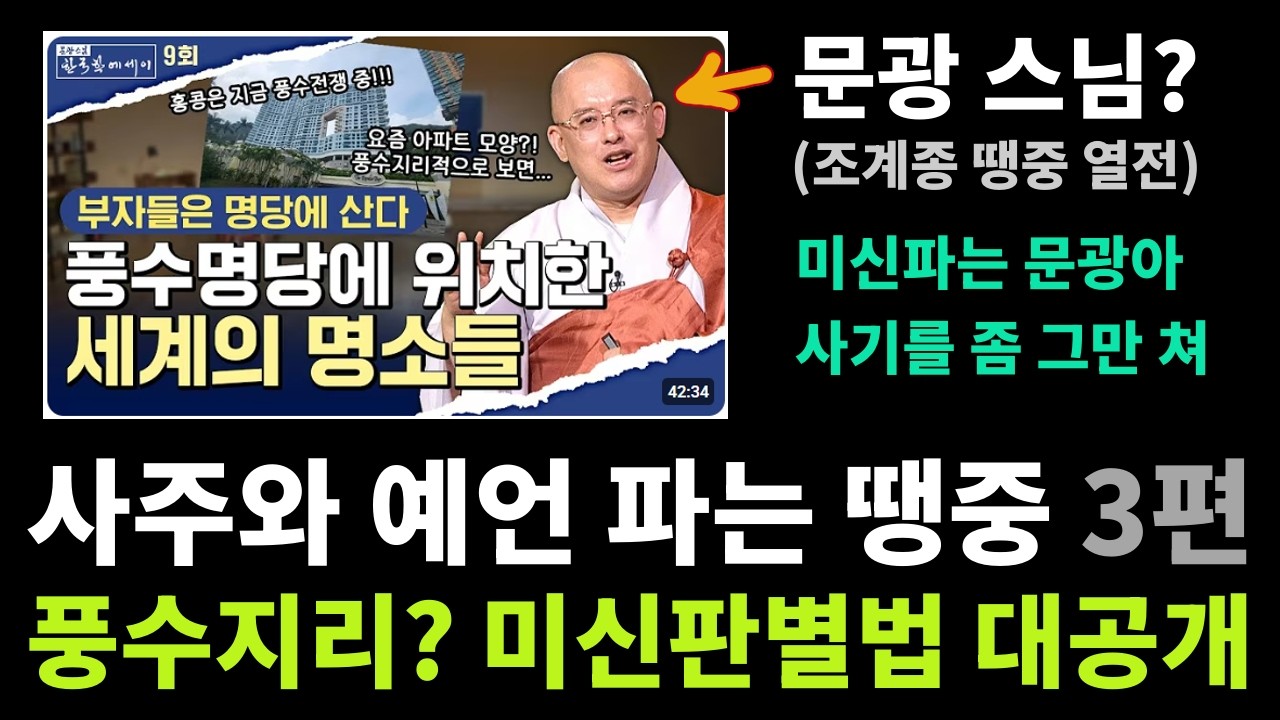
How can we distinguish empirical knowledge in feng shui from baseless superstition and expose errors of causality in plausible claims backed by authority?

How to Separate Superstition from Feng Shui: Dragon Veins, Killing Force, and Auspicious Sites Tested by Counterexamples

A critique of Monk Mungwang’s claims about auspicious feng shui sites, presenting a practical method for identifying superstition through verifiable evidence, counterexamples, thought experiments, and checks against confirmation bias.

강의 글 읽기 →
LECTURE24

2026.04.16

Can the premise that eight characters from one’s year, month, day, and hour of birth determine temperament and fate survive observation, statistics, dependent conditions, and countless counterexamples?

Why Four Pillars and Myeongri Are Nonsense: Questioning the Fiction of Fate, Statistics, and Birth Time

A critique of Monk Mungwang’s claims about four pillars, testing its premises through the arbitrariness of the perpetual calendar, absence of statistics, heredity and environment, hemispheres and twins, and the ambiguity of birth time.

강의 글 읽기 →
LECTURE23

2026.04.14

In a complex system intertwined with countless causes and conditions, can a human use Jeongyeok and periodicity alone to prophesy nations and the universe decades ahead with certainty?

Why Tanheo’s Prophecies Are Nonsense: Jeongyeok, Later-World Transformation, the Sixty-Cycle, and the Limits of Foretelling

A critique of Tanheo’s prophecies and Kim Il-bu’s Jeongyeok as presented by Monk Mungwang, examining failed predictions about 1984, a woman ruler and unification, and showing why complexity, dependent arising, cosmic variables, and the absence of fixed cycles make prophecy impossible.

강의 글 읽기 →
LECTURE22

2026.04.07

How can humans who do not know their own delusions break the cave of certainty and repeatedly escape error?

Critique of Dr. Jeon Hyeon-su: A Doctor Selling Supernatural Powers, Part 3—How Do We Escape Delusion?

Using claims about a wisdom eye and ultimate reality as a starting point, this essay argues that liberation begins by admitting that we too inhabit unrecognized delusions. Through the Cave Octads, a personal collapse of the concept of time, the rabbit-and-turtle tale, observation, and refutational thought experiments, it presents questioning, observation, reflection, and mutual criticism as the practical training of Buddhist wisdom.

강의 글 읽기 →