LECTURE SERIES

(Live) Talk with an Arhat

59 lectures to read in sequence.

LECTURE59

2026.11.06

What should we verify before relying on religious authority and comfort, and how should we judge when love for our family binds our lives?

A Ten-Year-Old Interview with POSTECH Professor Kang Byung-kyun

Watching Kang Byung-kyun’s interview from ten years earlier, I question rebirth, the true self, and divine revelation, distinguishing religious comfort from verification. The criticism leads through the Jogye Order’s social responsibility, family faith, and my father’s alcoholism to the choices we make about our own lives.

강의 글 읽기 →
LECTURE58

2026.11.01

Why is leaving worldly desire to pursue perfection and transcendence another delusion, and how can we question and live within human conditions without becoming attached to either shore, perception, or non-perception?

On This Shore and the Far Shore, Neither Perception Nor Non-Perception, and the Middle Way

I explain leaving both shores as reconsidering worldly desire and the pursuit of transcendent perfection alike. Through the Sutta Nipata and a hypothetical scenario borrowing the Buddha’s biography, I criticize supreme awakening, sameness in waking and sleeping, and complete nondiscrimination, and revisit neither perception nor non-perception and the Middle Way. Viewer questions follow on absorption, non-self, historical sages, and giving.

강의 글 읽기 →
LECTURE57

2026.10.20

As AI transforms scientific research and jobs, will we keep treating it as someone else’s problem until it happens to us?

AI Solves 98% of Unpublished Physics Problems: A Shocked Physicist’s Sleepless Nights

AI solved 49 of 50 unpublished physics problems and even uncovered errors in experts' calculations. I ask why we feel the shock only when it becomes our own problem. Through young people's job losses, politicians' responsibility to respond, and four AI agents cooperating in Minecraft, I discuss changes that society must prepare for together.

강의 글 읽기 →
LECTURE56

2026.10.17

Can we become wiser without questioning our own thoughts and emotions, and the words of authority figures?

What If Humans Cannot Understand AI’s Judgment? Questioning and Reconsideration as Buddhist Practice

If a doctor cannot understand what AI has detected, must the final judgment always belong to a human? Beginning with a conversation among friends, I critically examine Cheonghwa's statements and explain why practicing reflection on fast-moving thoughts and emotions is Buddhist practice.

강의 글 읽기 →
LECTURE55

2026.10.15

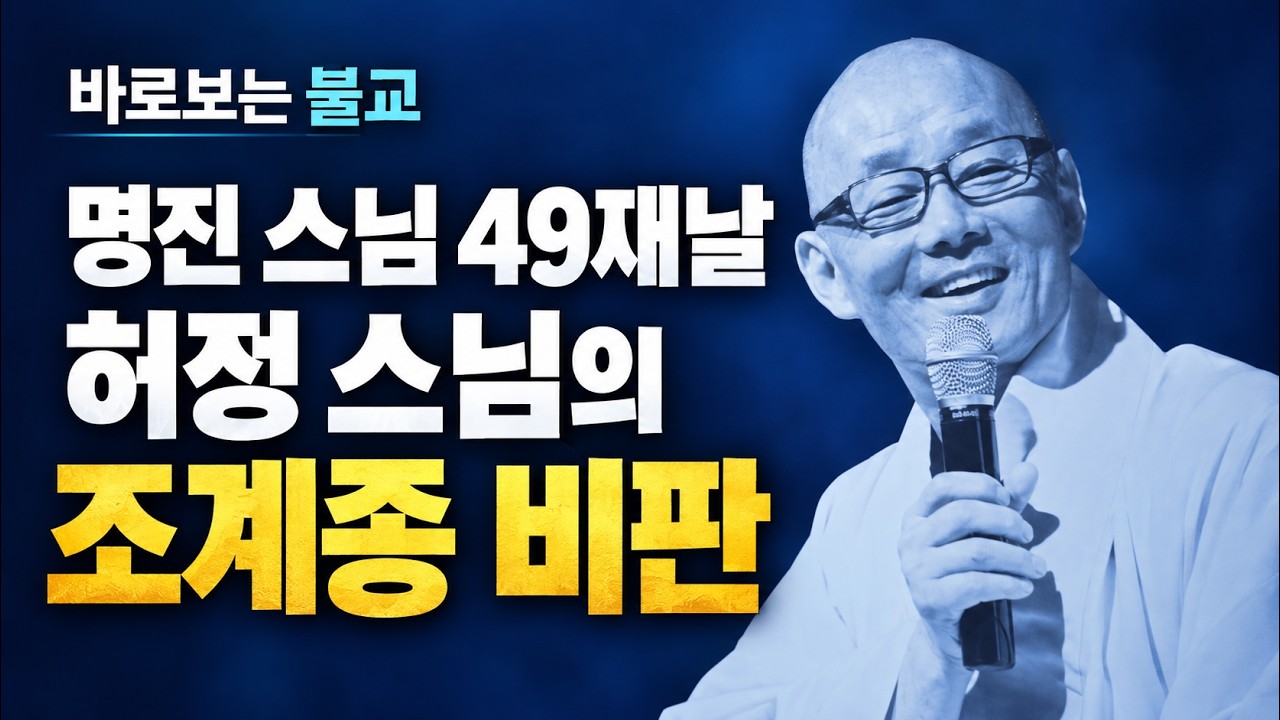
Can we speak of restoring honor and practicing Buddhism without apologizing and repenting for wrongdoing?

Asking Questions or Having a Conversation

Prompted by Myeongjin's forty-nine-day memorial and posthumous Great Master title, I read Heojeong's criticism of restoring honor without an apology. I examine religious people's social responsibilities and the Jogye Order's problems, and discuss why acknowledging past wrongs is also essential to individual Buddhist practice.

강의 글 읽기 →
LECTURE54

2026.10.13

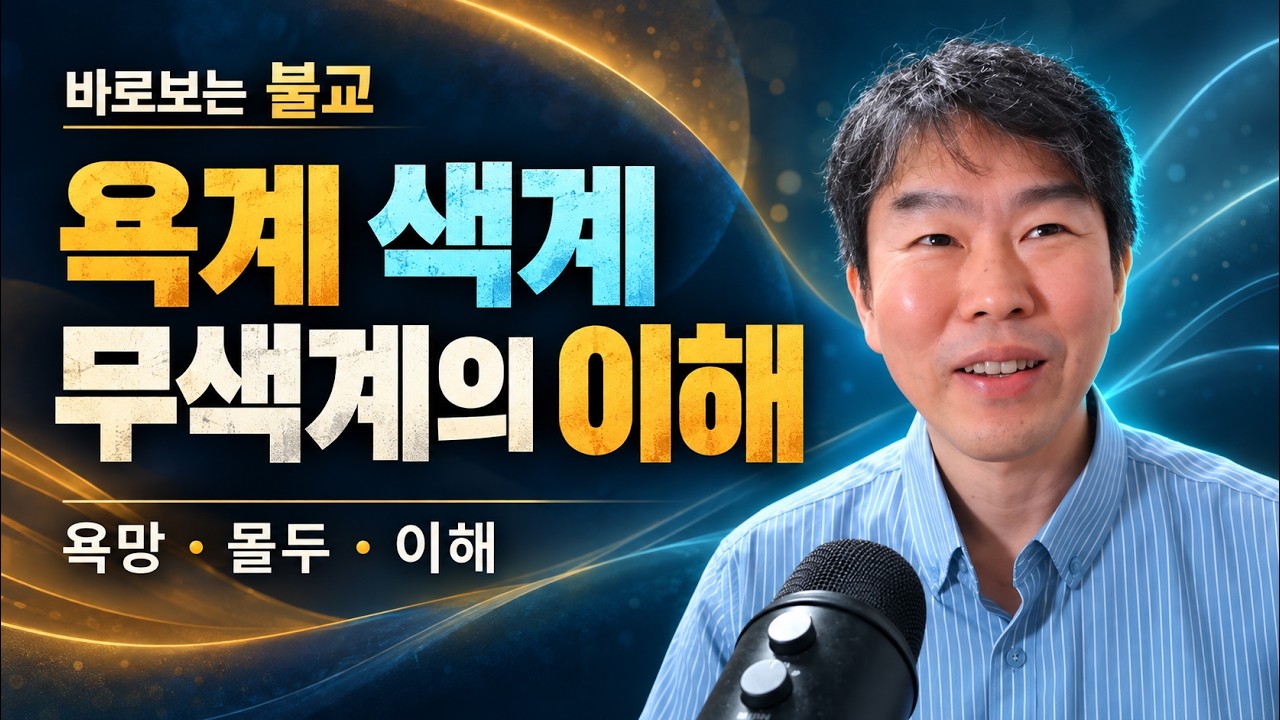
Does becoming free of desire and attachment mean becoming a transcendent being, or understanding the concepts that bind me?

Desire, Form, Formlessness, and the Notion of Self: Buddhism as Understanding Myself

Reading the realms of desire, form, and formlessness in light of my own life, I distinguish a life driven by desire, the temporary quiet of absorption, and understanding the concepts that bind me. Through ora and param, stopping and observing, and the Diamond Sutra’s four notions of self, person, sentient being, and lifespan, I discuss Buddhism as understanding human conditions and changing our lives, rather than becoming transcendent beings.

강의 글 읽기 →
LECTURE53

2026.10.10

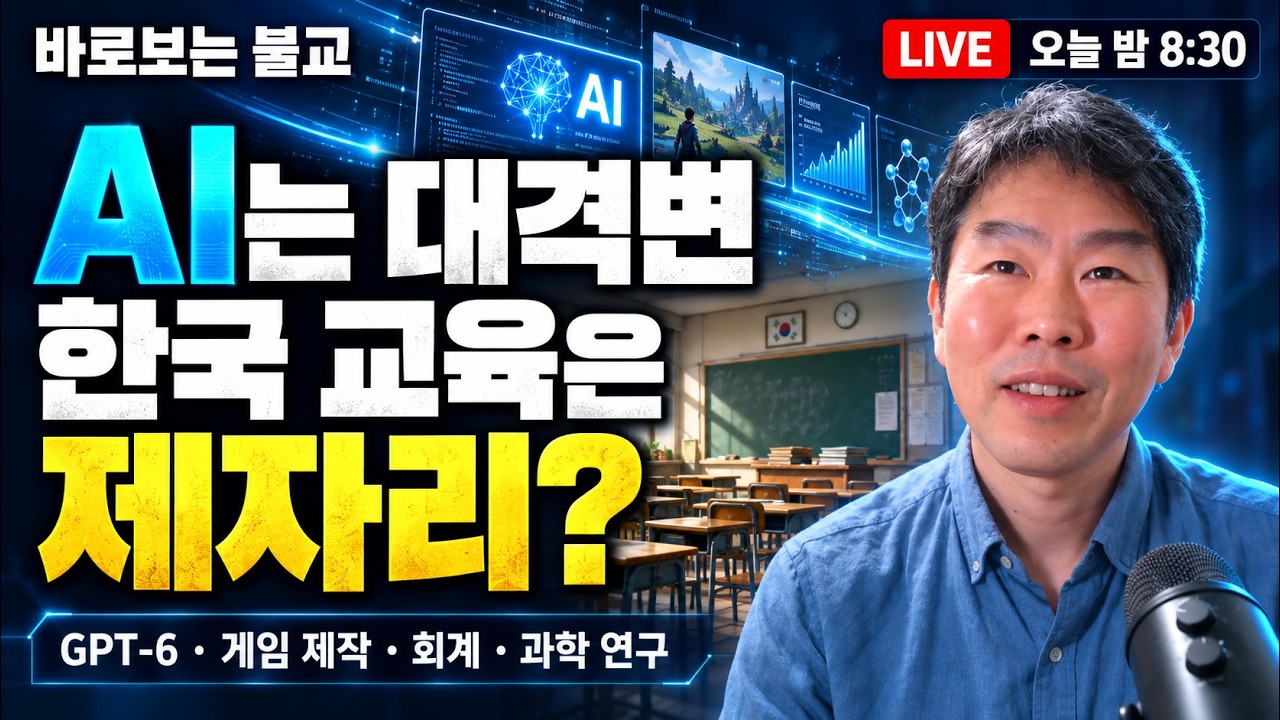
In a world where AI is rapidly taking on human work, why do we still make children compete through the same studies and exams, and what should we teach them anew?

AI Is Changing Radically, but Is Korean Education Standing Still?

I examine changes in AI that now creates games from spoken requests, performs accounting tasks and scientific research, produces mathematical proofs, and deciphers historical codes. Drawing on my experience building a website without writing a line of code and my third-grade son's English lessons, I criticize education centered on memorization and competition for scores. I ask what thinking, judgment, language skills, and cooperation people need to live with AI, and how we can discuss changing education, society, and the economy together.

강의 글 읽기 →
LECTURE52

2026.10.03

How can the Heart Sutra’s emptiness and the breaking of concepts be applied to today’s judgments and actions?

How Does the Heart Sutra Change My Life? Breaking Free of Concepts and Everyday Practice

How do the Heart Sutra’s emptiness and the breaking of concepts apply to today’s judgments and actions? Two routes to quitting smoking, a river’s changing course, and the shock of impermanence illuminate how life changes. Questioning rules that separate boys and girls, religious worldviews, and images of a Buddha leads to a practice of questioning, observing, and reflecting on the thorn in one’s own throat.

강의 글 읽기 →
LECTURE51

2026.09.29

Does the absence of intrinsic nature deny the characteristics of things, or break down the mistake of treating concepts as independent substances?

The Real Meaning of Having No Intrinsic Nature – Understanding Emptiness at the Heart of the Heart Sutra

If things have no intrinsic nature, does an apple have no taste? I place the emphasis on existing by itself rather than on properties, and read the Heart Sutra through dependent arising and the historical context of emptiness. From the five aggregates, arising and perishing, and purity and impurity to suffering and nirvana, I examine the mistake of grasping concepts as substances, then turn to freedom from disturbance and Buddhist study in everyday life.

강의 글 읽기 →
LECTURE50

2026.09.24

Before fearing an AI self, do we understand what we ourselves mean by the self?

The Self in the Age of AI — Afraid That AI Might Develop a Self?

Does AI become dangerous only when it acquires a self? Beginning with AI judgment, this inquiry examines human moral standards and preferences, the boundaries of body, memory, and cognition, and non-self as understanding rather than a mystical experience. Viewer exchanges extend the discussion to attachment, ownership, livelihood, and AI weapons.

강의 글 읽기 →
LECTURE49

2026.09.22

How do AI intelligence and chimpanzee attachment invite us to reconsider human exceptionalism and the idea of a self continuing after death?

Thinking About Existence in the Twenty-First Century: The Illusion of Human Uniqueness

AI solving old ciphers and chimpanzees holding onto dead infants invite questions about intellect, emotion, and human exceptionalism. I connect ancient questions of existence with contemporary observations and develop my view of humans as dependently arisen beings.

강의 글 읽기 →
LECTURE48

2026.09.20

What questions in ancient India led Buddhism to answer with dependent origination, impermanence, and non-self?

The Background to Buddhism’s Birth: What Questions Were Asked in Ancient India?

What questions led to dependent origination, impermanence, and non-self? I trace Buddhism’s emergence through shramana traditions, the Upanishads, and challenges to Vedic authority, distinguishing observation and wisdom from quiet states and the pursuit of a true self.

강의 글 읽기 →
LECTURE47

2026.09.17

If what I take for granted may be a delusion, how can I become wiser or attain liberation without questioning?

A Time for Dialogue: Why Is Buddhism a Religion of Questioning?

Why must Buddhists ask questions? Through the Cave Eight Verses and examples of familiar social assumptions, I explore escaping delusion and why questioning continues after awakening. The conversation moves through religious authority, education in the AI era, money and desire, and combat sports.

강의 글 읽기 →
LECTURE46

2026.09.15

If AI dramatically expands production while the gains concentrate among owners of capital and resources, how will workers live, and what should we share?

Anthropic’s Report on the US Economy in 2030 as AI Advances

Reading Anthropic's scenarios for the US economy in 2030, I ask who receives the wealth created by AI productivity. I examine hiring, physical AI, recursive self-improvement, and the distribution between labor and capital, then consider how society might share the gains.

강의 글 읽기 →
LECTURE45

2026.09.12

When AI helps biological neural network research and that research advances AI in return, what do we come to understand, and what changes should we prepare for?

News of the Completed Fruit Fly Brain Map: On the Mutual Acceleration of AI Development and Biological Neural Network Research

Completing a map of the fruit fly brain’s neural network does not end with research on one small insect. AI, which advanced through image recognition, analyzes biological networks, and the results in turn influence the creation of more efficient AI. Following neurons and synapses, plasticity and game experiments, we distinguish a structural map from an understanding of learning and examine how this reciprocal acceleration connects with questions about science, labor, and Buddhism.

강의 글 읽기 →
LECTURE44

2026.09.10

When AI takes over human intellectual tasks, do humans become stupid, or must we change the standards of education and society by asking what to delegate and what to judge for ourselves?

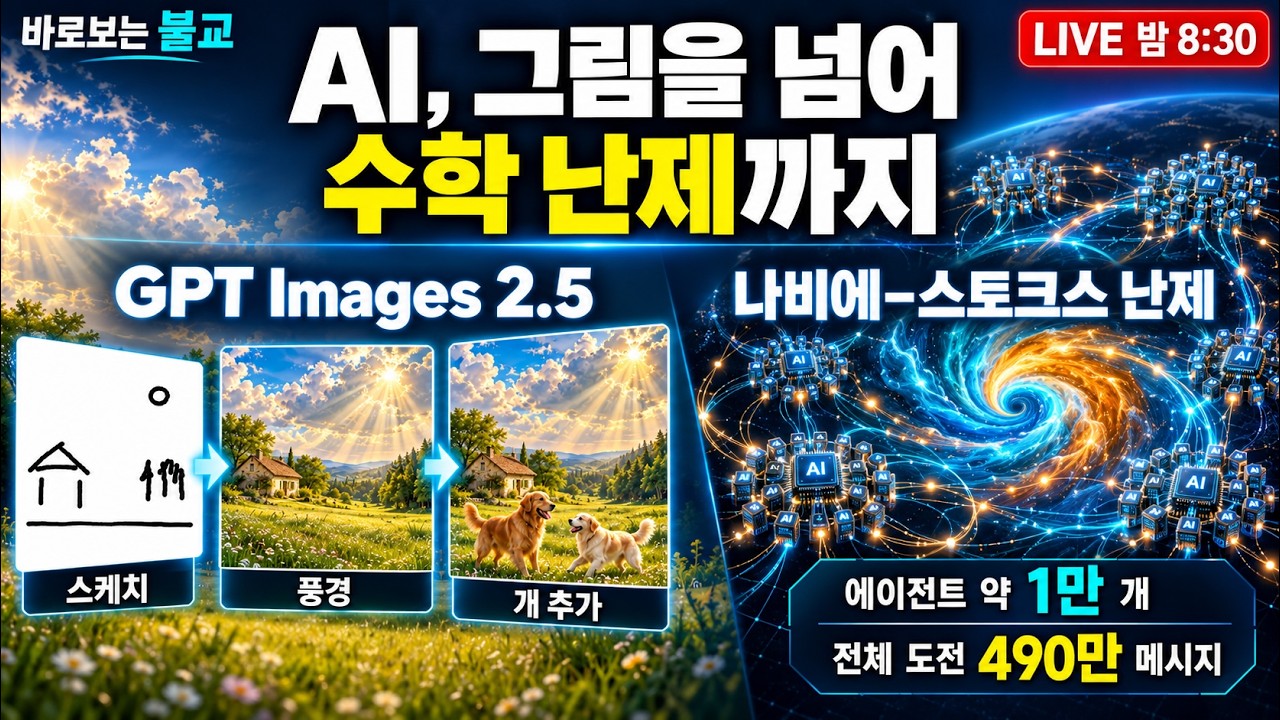
AI Solves the Navier–Stokes Problem: How Artificial Intelligence Affects Us

In an age when AI solves mathematical problems, edits images, and passes tests designed to distinguish people from machines, will humans stop using their brains and become stupid? After examining collaboration among ten thousand agents and the acceleration of technology, I revisit fears of declining intelligence through homework and exam scores, calculators and phones, and AlphaGo and Go. We need to reshape education around critical thinking and questions, respond to job displacement and inequality, and share the achievements and resources of human civilization.

강의 글 읽기 →
LECTURE43

2026.09.08

As AI accelerates age-reversal research and future technologies, how can we respond to labor displacement and resource monopolies so that their abundance is shared?

AI Is a Time Machine to the Future: Reversing Aging, Accelerating Technology, and Abundance for Whom?

Artificial intelligence is why I expect age-reversal technology to arrive sooner than many anticipate. Just as computers compressed calculation time, AI allows energy to be used to expand the intelligence applied to research and development. Beginning with my experience of GPT-6 Astra, I explore accelerating technology, the role of humans, employment, monopolies over resources, energy and AI, and the crisis facing small businesses and the economic system. Sharing future abundance requires public debate and a social response now.

강의 글 읽기 →
LECTURE42

2026.09.05

Does GPT-6 Astra's ability to use computers like a person and perform multiple forms of work signal entry into the AGI era, and what must society discuss and prepare before that change destabilizes labor markets and the economic system?

AGI Is Already at Our Doorstep: GPT-6 Astra, Computer Use, and the Future of Work

OpenAI has unveiled the model internally known as Astra as GPT-6. Its demonstrations show an AI taking spoken instructions, operating applications, and carrying out multiple tasks across a computer. This talk asks whether that marks entry into the AGI era, then moves beyond technological amazement to the displacement of office and professional work, the danger to consumer demand and the economic system, and the urgent need for a public debate on education, industry, and labor before mass unemployment arrives.

강의 글 읽기 →
LECTURE41

2026.09.03

When artificial intelligence can perform homework, reading, and parts of our thinking, what understanding and judgment remain our responsibility, and can we question not only AI answers but also examinations and scriptural authority by checking sources and thinking for ourselves?

How Should Humans Ask Questions After Outsourcing Thought to AI? — Rethinking Exams, Reading, and Buddhist Scriptures

Beginning with the $399 Microduck physical-AI robot, this broadcast examines research in which generative AI improved homework scores while scores on AI-free exams declined. The answer is not to ban AI, but to rethink exams, education, reading, and literacy—and to apply the same demands for doubt, source checking, and ethical judgment to Buddhist scriptures and religious authority.

강의 글 읽기 →
LECTURE40

2026.09.01

Is it fair to criticize only the later composition of Mahayana sutras while treating the Nikayas as Early Buddhism and authentic teaching, and how can we leave inherited ideas about scriptures, teachers, precepts, and heroes to form questions rooted in our own lives?

Are Only Mahayana Sutras Apocryphal? — The Nikayas Are Not Early Buddhist Scriptures Either, and Liberation Is Life’s Fifth Adolescence

After examining Doom running on a virtual CPU designed by GPT-5.6 Sol, this broadcast criticizes thumbnails that frame only Mahayana literature as fabricated. It argues that most Nikaya texts were also written later, then uses questions about martial arts, precepts, and historical heroes to describe liberation as a recurring fifth adolescence that breaks inherited concepts.

강의 글 읽기 →